
Modern Problems, Ancient Solutions
Jan 12, 2026Why Your Body Is the Guide in Motherhood

Modern problems don’t always need modern solutions.
Sometimes, the answers have been here all along.
Practices like breathwork, mindfulness, and somatic awareness have existed for thousands upon thousands of years. They worked then. They still work now. And they may be more necessary than ever in a world that constantly pulls our attention into screens, speed, and the quiet expectation that women, especially mothers, should be able to do it all.
Because here’s the reality.
Most modern moms are returning to work while their babies are still very young. In the U.S., many are back on the job within the first few months after birth, nearly half by about 12 weeks, and most within the first three months of parenthood.
And while that might be true because women are incredibly capable, resilient, adaptive, powerful... it doesn’t mean you should have to do it all this way. Capability doesn’t equal obligation. Strength doesn’t cancel out the need for care.
We’re expected to go back to work, keep the house running, feed everyone, maintain our appearance, stay emotionally regulated, and somehow not complain about any of it. Because complaining isn’t cute. And no one likes it.
Yikes.
The message is subtle but constant: You can do it all.
And while that might be true… it doesn’t mean you should.
I’m not here to tell you to overhaul your life or become someone else. I’m here to remind you that your body has been giving you information all along, and we’ve just gotten really good at ignoring it.
Modern Expectations vs. Ancient Biology
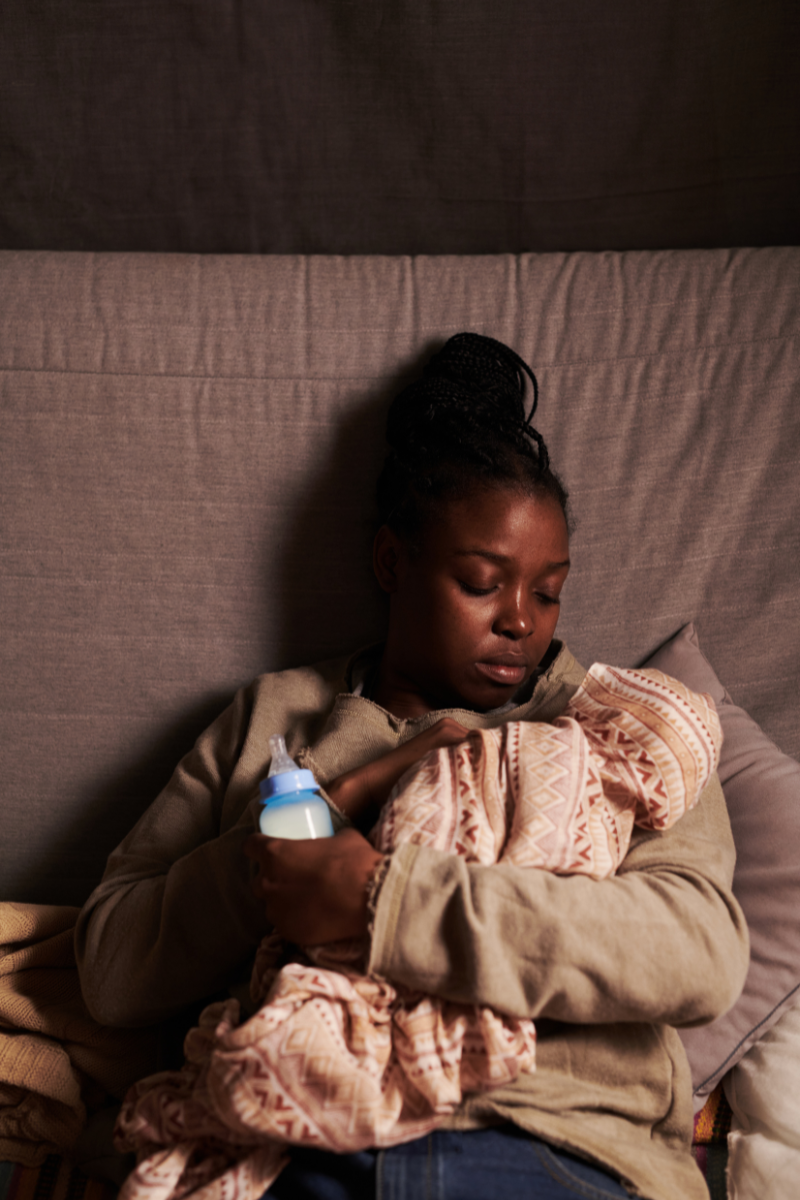
Our modern lives move fast. Faster than the human nervous system was ever designed to handle.
We live in a culture that rewards productivity, efficiency, and pushing through discomfort. But your body didn’t evolve for constant alertness, endless demands, or chronic overstimulation. It evolved for rhythm. For effort and recovery. For connection and rest.
Motherhood magnifies this mismatch.
Your system is already navigating hormonal shifts, sleep disruption, emotional responsibility, and the constant attunement required to care for another human being. Layer modern expectations on top of that, and it’s no wonder so many mothers feel overwhelmed, disconnected, or perpetually on edge.
This isn’t a personal failure. It’s a biological reality, a place where modern life simply hasn’t caught up with the human experience of motherhood.
When pushing through stops working, it’s not because you’re weak. It’s because your body is asking for a different approach.
The Body Is the Messenger
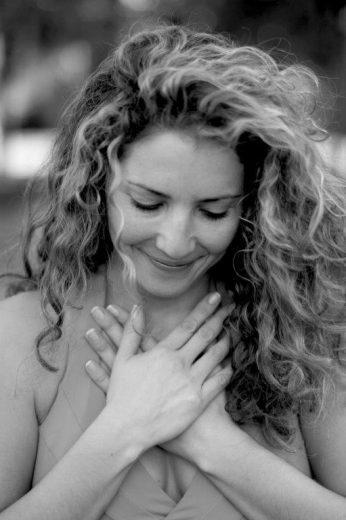
Your body is always communicating with you.
Not in words, but through sensation, tension, fatigue, feelings, restlessness, and breath. These signals are not random. They are responses to what you’re carrying, what you’re navigating, and what your system is being asked to hold.
In motherhood, these signals often get louder.
A tight jaw when you’re rushing.
A clenched belly when you’re bracing.
A shallow breath when the day feels like too much.
A restlessness that doesn’t go away, even when you finally sit down.
These aren’t inconveniences or signs that you need to push harder. They’re messages. Your body’s way of saying, something here needs attention.
The challenge isn’t that your body is communicating.
It’s that we’ve been taught to override it.
We’re taught to push through exhaustion, dismiss discomfort, and quiet internal cues in favor of productivity. But motherhood doesn’t work well that way. The demands are too constant. And eventually, the body refuses to be ignored.
This is where awareness begins. Not by fixing anything, but by listening.
The Breath Is the Bridge

If the body is the messenger, the breath is the bridge.
Across cultures and traditions, breath has been understood as life force itself. In yogic philosophy, it’s called prana. In Chinese medicine, chi. Different words, same truth. Breath is the movement of life through the body.
But you don’t need to study philosophy to work with it.
You experience this every time your breath shortens under stress. Every time it catches when you’re overwhelmed. Every time it deepens when you finally exhale and feel even a slight release.
The nervous system understands breath immediately. That’s why breath is such a powerful entry point when motherhood pulls you out of yourself.
The body is the messenger. The breath is the bridge back home.
This is why breathwork isn’t about doing more. It’s about reconnecting to something that’s already there. Something constant. Something accessible, even on the hardest days.
Why Small Moments Matter More Than Big Changes

Somatic practices don’t need to be dramatic or time-consuming to be effective.
In fact, the body responds best to repetition, not intensity. Small moments, practiced consistently, are how the nervous system learns that it’s safe to relax again.
Sometimes that looks like a few slow breaths in the middle of the day.
Sometimes it looks like stepping outside and letting the sun hit your skin, soaking in a little vitamin D like an iguana on a warm rock.
Sometimes it’s simply pausing long enough to notice how your body feels instead of immediately reacting.
These moments don’t fix motherhood. They don’t erase stress or remove responsibility. But they change how you meet what’s in front of you.
And over time, that changes everything.
Where you once moved on autopilot, you now have a choice.
Curiosity as the Entry Point

Once choice becomes available, curiosity is often what opens the door.
Not the kind of curiosity that interrogates or demands answers, but a softer kind. The kind that notices without rushing to fix. The kind that asks what’s happening here instead of what’s wrong with me.
Curiosity changes the quality of your attention.
Instead of reacting immediately, you pause just long enough to sense what’s present. You notice the tightness in your stomach before snapping. You feel the shallow breath before pushing through. You recognize the restlessness before it turns into irritation or shutdown.
Questions naturally arise, not as problems to solve, but as invitations to listen:
Why is my stomach tight right now?
What am I holding in?
What hasn’t had space yet?
You don’t need perfect answers. The act of asking is enough. Curiosity slows the moment just enough for awareness to step in, and awareness creates room.
Room to respond instead of react.
Room to soften instead of brace.
Room to choose something different, even if it’s small.
This is how the work unfolds. Gently. Moment by moment.
Integration: Living From the Body, Not Against It

Integration isn’t about doing more.
It’s about allowing what you’ve noticed to slowly inform how you live, how you respond, and how you care for yourself in the middle of real life.
When you begin listening to your body, not as something to manage but as something to trust, the relationship changes. You stop seeing sensations as interruptions. You stop treating tension or fatigue as something to push past.
You notice sooner.
You relax sooner.
You return to yourself more quickly when things feel overwhelming.
Some days this looks like a few intentional breaths.
Some days it looks like stepping outside.
Some days it looks like simply acknowledging that today is hard.
Integration is subtle. It doesn’t announce itself. It happens quietly, through repetition, presence, and small moments of choice that accumulate over time.
This is the difference between surviving motherhood and inhabiting it.
You’re not here to override your body or outperform your limits. You’re here to live in partnership with yourself, guided by awareness, grounded in breath, and supported by the wisdom your body has carried all along.
And if you find yourself wanting support as you practice this, not because anything is wrong, but because this is a human response to a demanding season, you don’t have to do it alone.
Ready for Your Next Move?
One conversation can change everything.
You've been living in your head long enough. The Centered Clarity Call is a conversation. A moment to pause, say it out loud, and have someone really listen. No obligation. Come as you are.
